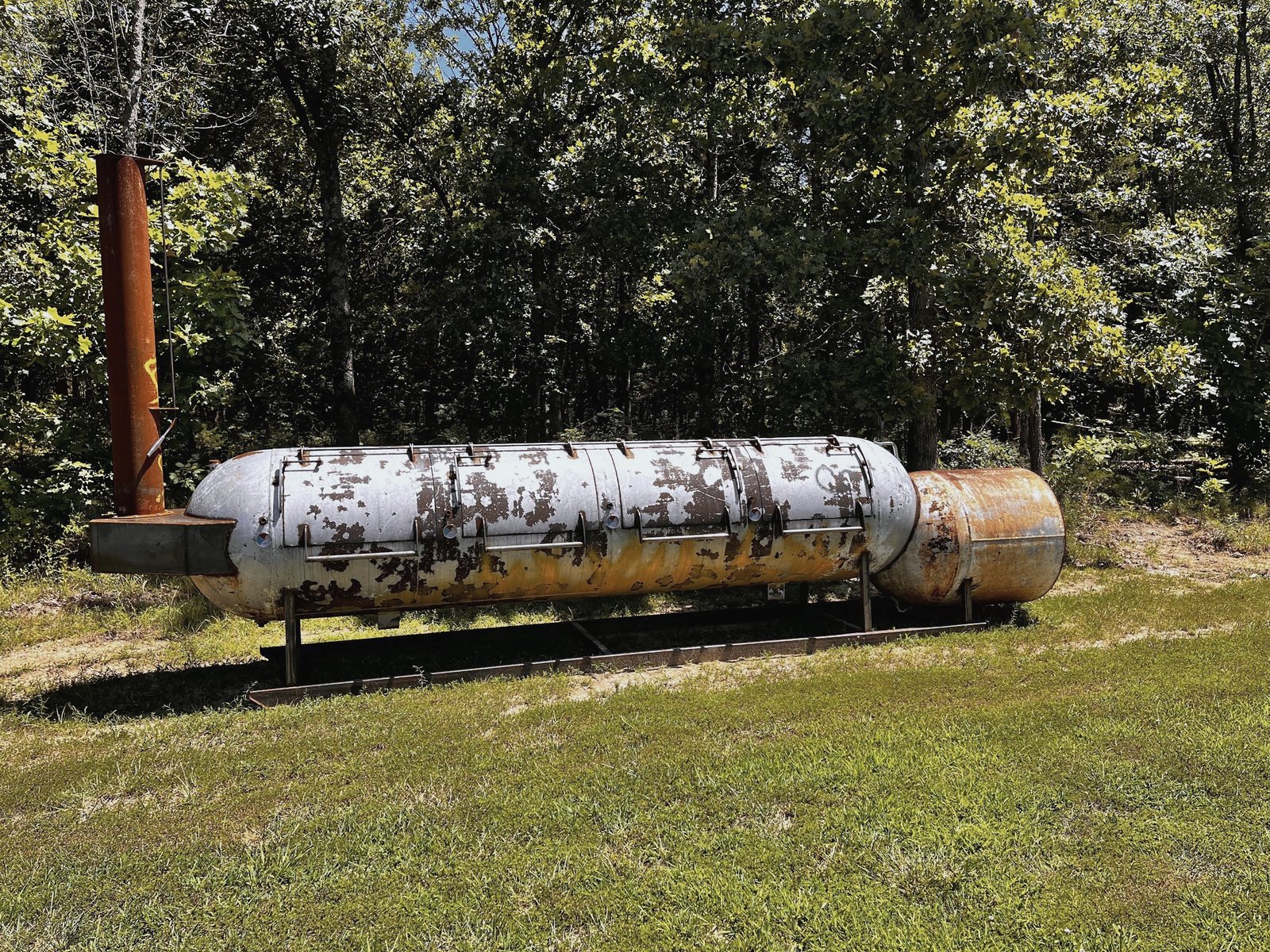
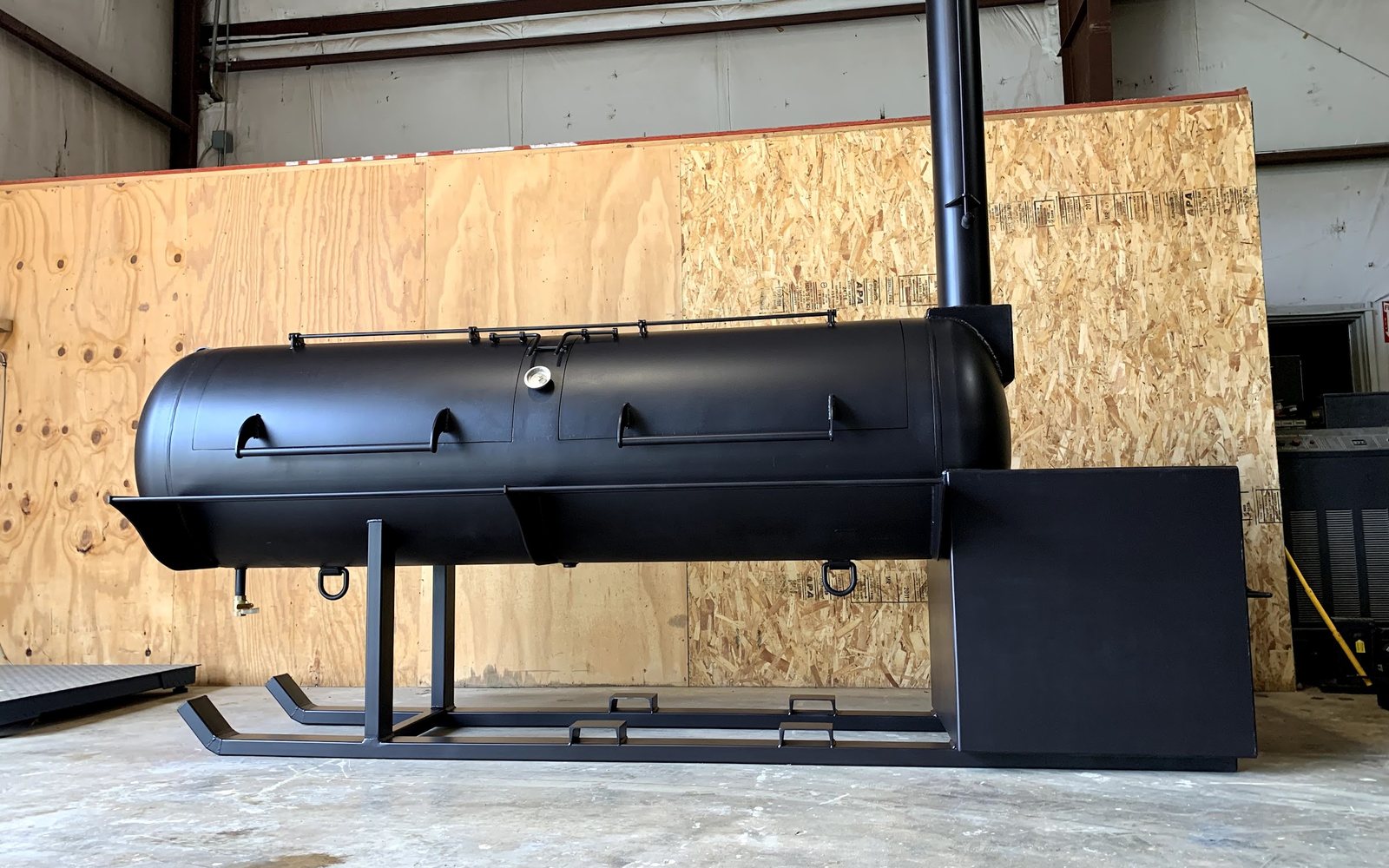
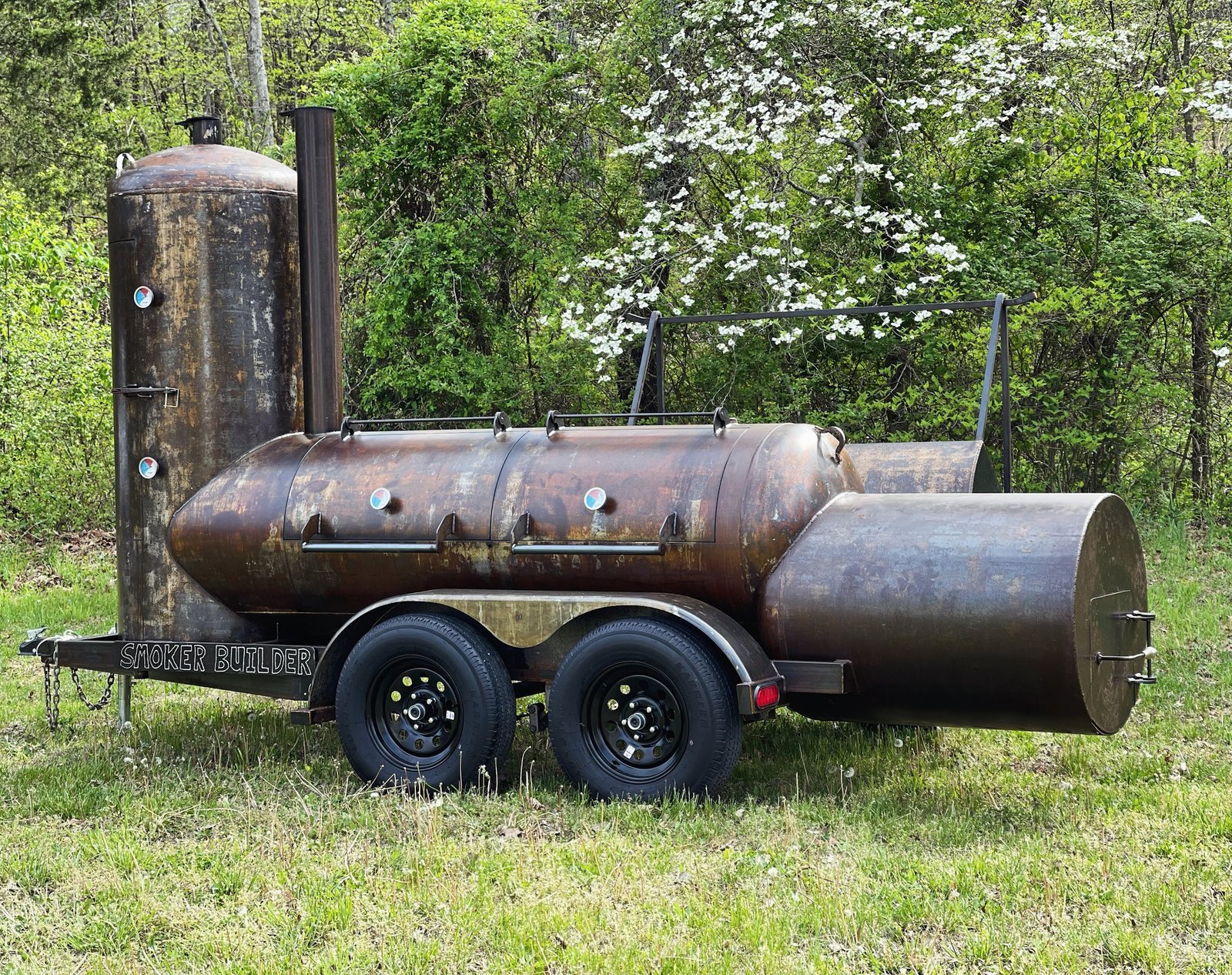

A reverse flow smoker is an offset with a solid baffle plate under the cooking grate. The heat runs under the plate to the far end, turns around, comes back over the food, and leaves out a stack on the firebox end.
That turn is where the name comes from. The air reverses direction before it leaves.
Below is how the air moves through one, why it cooks so even, how to size it, and what's different about building one compared to a straight offset.
Rather start from a drawing? My plan sets are drawn by cook chamber type and size. See the reverse flow smoker plans
Key facts from Frank Cox, The BBQ Pit Engineer
- A reverse flow is a straight offset plus a full-length baffle plate welded in solid, a firebox mounted low, and the stack moved to the firebox end.
- Firebox: 31% to 34% of the cook chamber's volume.
- Throat area = firebox volume in cubic inches × 0.008, in square inches.
- Return gap: open area of 0.50 to 1.25 times the throat area. Start at 0.50, and size up, never under.
- Baffle plate: 1/4", welded solid, with a 1-1/2" strap lip on the gap end, so it catches grease and sends it to the drain.
- Firebox top at least 2" below the cooking grate. Grate at least 2" above the plate, 4" is better.
- For two even full cooking levels, build a reverse flow. For a first build, I still recommend a straight offset.
Last updated November 27, 2026
What is a reverse flow smoker?
It's an offset smoker with one more part: a solid steel plate that runs the length of the cook chamber, under the grate.
The firebox still sits off to the side. The difference is the plate makes the heat travel the full length of the chamber twice, once under the plate and once back over the food, before it can leave.
Because the air finishes its trip back at the firebox end, that's where the stack goes.
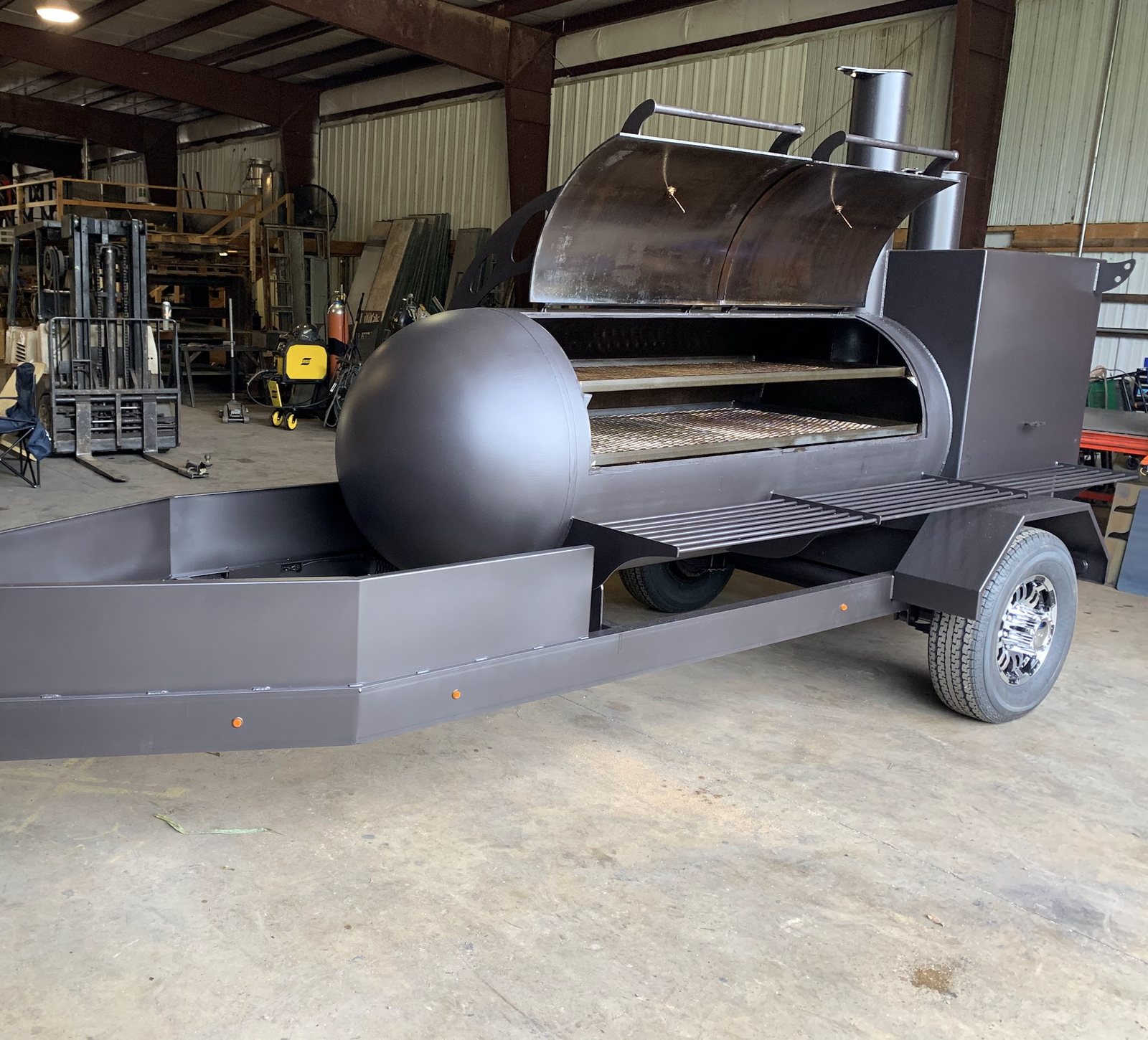
How does a reverse flow smoker work?
- Air comes in at the firebox intake and feeds the fire.
- Heat and smoke leave the firebox through the throat, under the baffle plate.
- They travel under the plate to the far end of the cook chamber.
- At the far end they come up through the return gap, the opening left between the end of the plate and the tank head.
- They turn around and travel back over the food toward the firebox end.
- They leave out the stack, top dead center, at the firebox end.
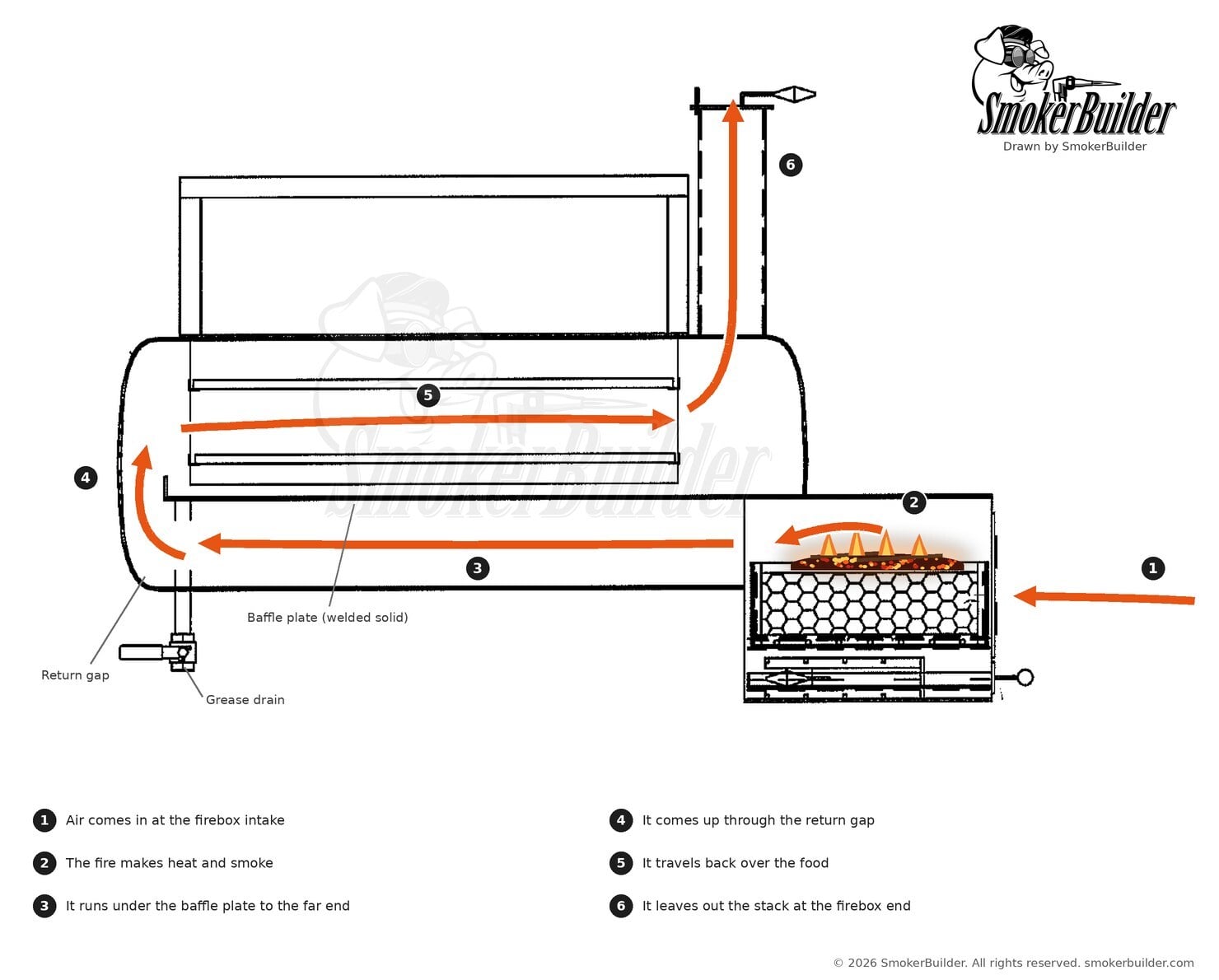
Tap the diagram to open it full size
Why does a reverse flow cook so even?
Two reasons, and both come from the plate.
The plate forces all the heat down the full length of the chamber and back before it can get out. Nothing takes a shortcut.
And the plate itself is 1/4" steel sitting right under the grate. It soaks up heat and gives it back to the food from underneath, end to end.
Reverse flow or offset: which should you build?
If you need two full cooking levels that both run even, build a reverse flow.
For a first build, I still recommend a straight offset. A reverse flow is more steel, more welding and more weight on the trailer. The baffle is in there for good. And it can run too clean for my taste.
The full comparison is in Smoker Designs.
How big should the firebox, throat and return gap be on a reverse flow?
- Firebox: 31% to 34% of the cook chamber's volume.
- Throat: firebox volume in cubic inches × 0.008 = square inches of opening. Size up, never down.
- Return gap: the open area at the end of the plate should be 0.50 to 1.25 times the throat area. Start at 0.50. If your throat is 280 square inches, start the gap at about 140.
- Stack: same size as on an offset. At least half the cook chamber's length, never under 33". The only change is where it goes.
- Intake: firebox volume × 0.003 = square inches of intake.
Size the gap by area, not by a measurement. A 1" gap under a wide plate is a big opening. Under a narrow plate it's a small one. It doesn't have to hit the exact number, either. Make it at least as big as the target, or a little bigger. Never smaller.
Worked examples for the rest of the sizing are in Offset Smoker Sizing.
Where do the firebox, plate and grate sit?
- The firebox mounts lower than on a straight offset. Its top sits at least 2" below the cooking grate.
- The plate sits at or above the top of the firebox, never below it.
- The grate sits at least 2" above the plate. 4" is better. Any closer and the heat off the plate scorches the bottom of the food.
Keep the stack up top. I would not recommend moving the smokestack down. The air cools off too much and condenses, and I've seen it completely plug a stack.
A reverse flow hangs low, so watch your trailer ground clearance. Keep at least 8". More on mounting the firebox: Offset Smoker Firebox Design.
How is a reverse flow smoker built?
Same tank prep and same cutting order as a straight offset. The differences come after the holes are cut.
- Cut the firebox hole, then the stack hole, then the doors last, so the shell doesn't twist as the stresses let go.
- Mount the firebox low, with its top at least 2" below where the grate will sit.
- With the firebox mounted and the doors cut, fit the baffle plate and weld it in solid.
- Put the stack at the firebox end, top dead center.
- Build the drain at the gap end of the plate.
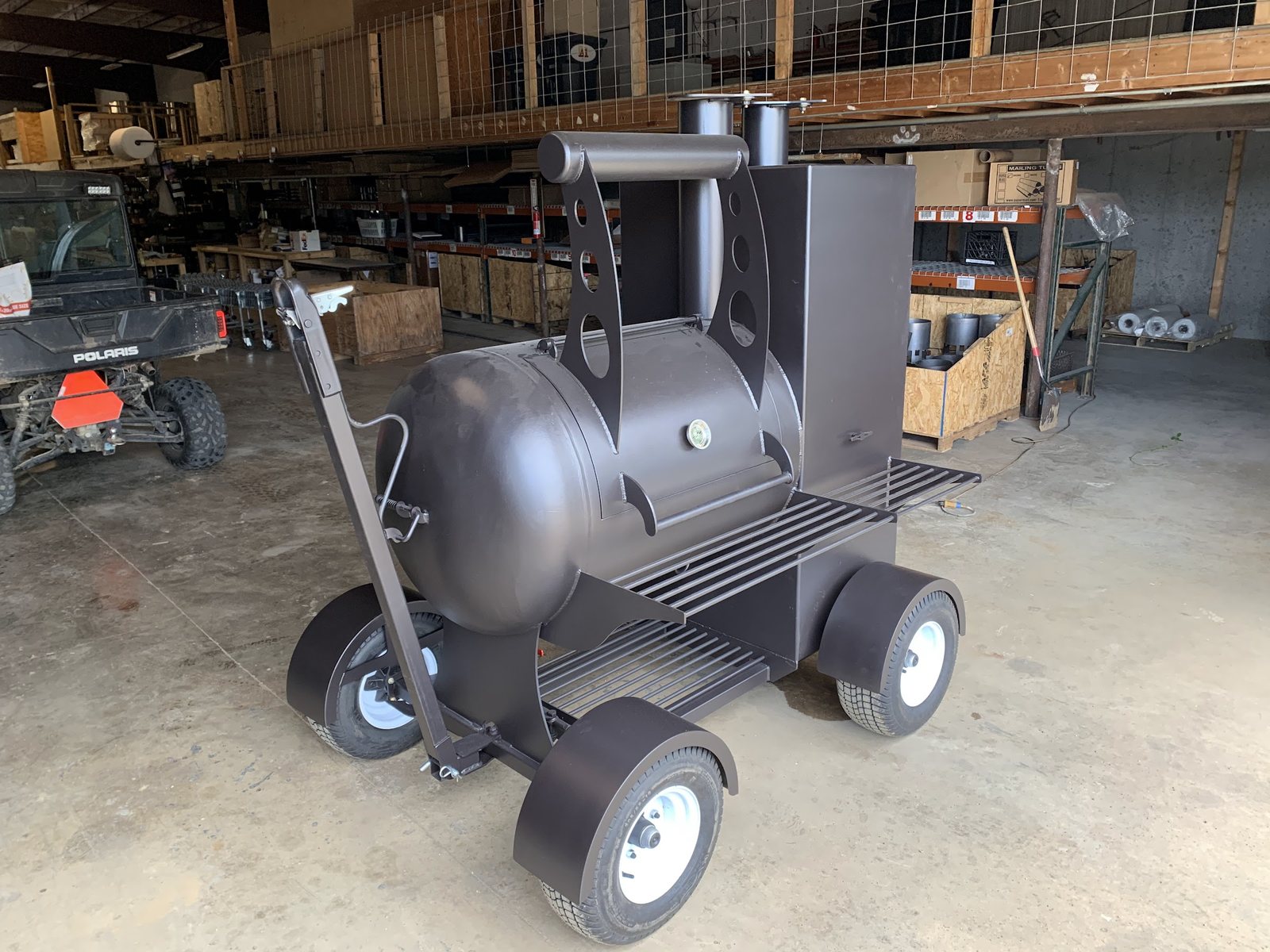
The rest of the order is in How to Build a Smoker.
How do you fit and weld in a reverse flow baffle plate?
- Cut it straight. Don't template the long edges to the tank's curve. Cut the plate to the right width and let the weld close the gap to the wall.
- One piece is best, but it usually has to be cut into 2 or 3 sections. Bevel the seams, weld them back together, and grind those beads flat so grease doesn't pool on them.
- Let the tank hold it. Cut to the right width, the tank sides hold the plate. Tack in small scrap pieces if you need to hold it level.
- Put a lip on the end. Weld a 1-1/2" steel strap across the gap end of the plate to form a lip. That keeps grease from running off the end of the plate and sends it to the drain.
- Skip weld it. Run 6" to 12" beads in an alternating pattern around the plate so the tank doesn't move or twist. Burn in properly at every start and stop.
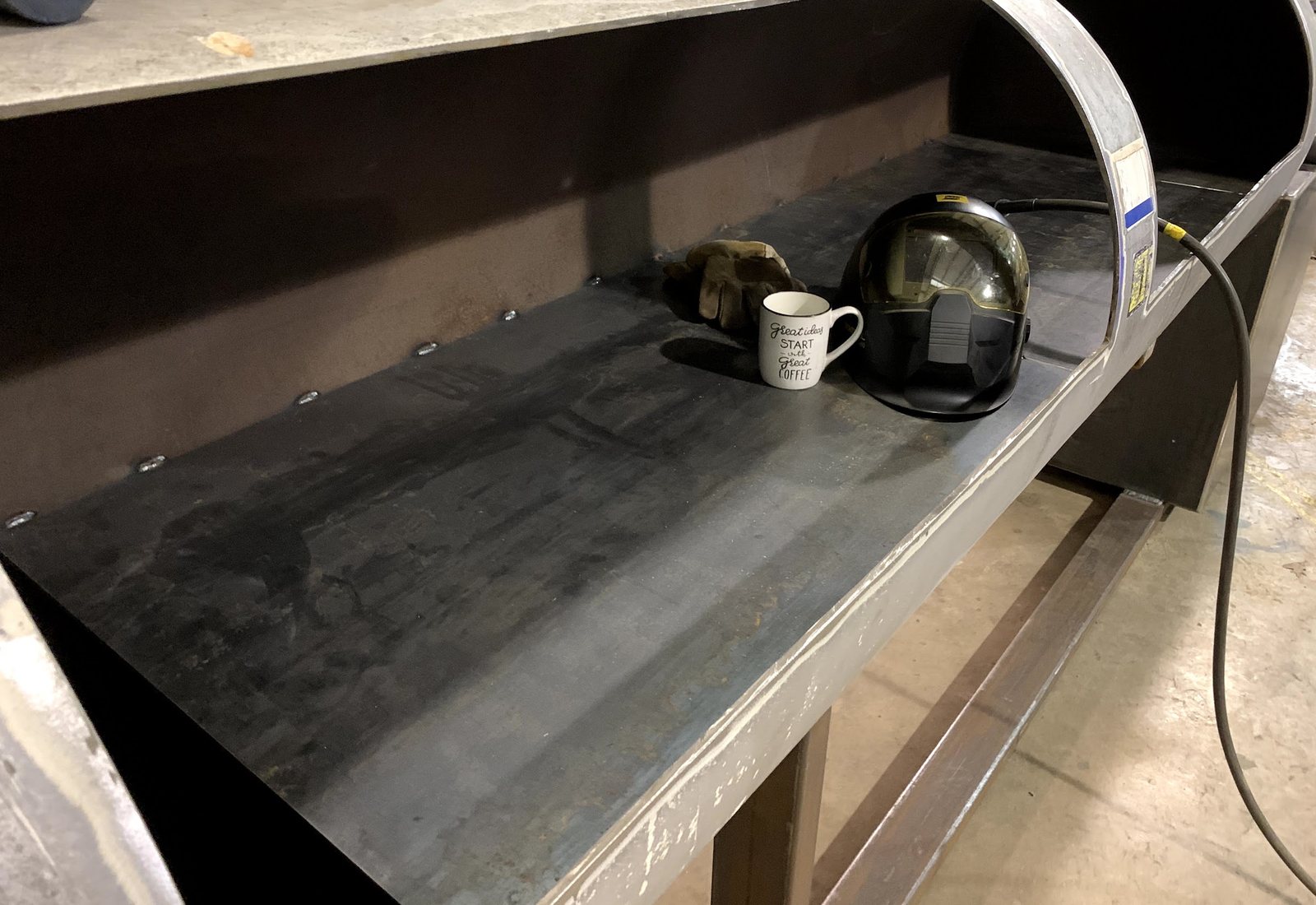
It's welded in solid so it catches the grease and sends it to the drain. If grease gets underneath, the only way to clean it is to pull the plate, and that plate is heavy and awkward to get out.
How do you lay out the return gap?
Stop the plate short of the far tank head by about the right amount, and leave the end cut straight. It doesn't need to match the curve of the head.
Weld the 1-1/2" strap across that end to form the grease lip.
Then check the open area against your target. At least as big, or slightly bigger.
Where does the grease drain go on a reverse flow?
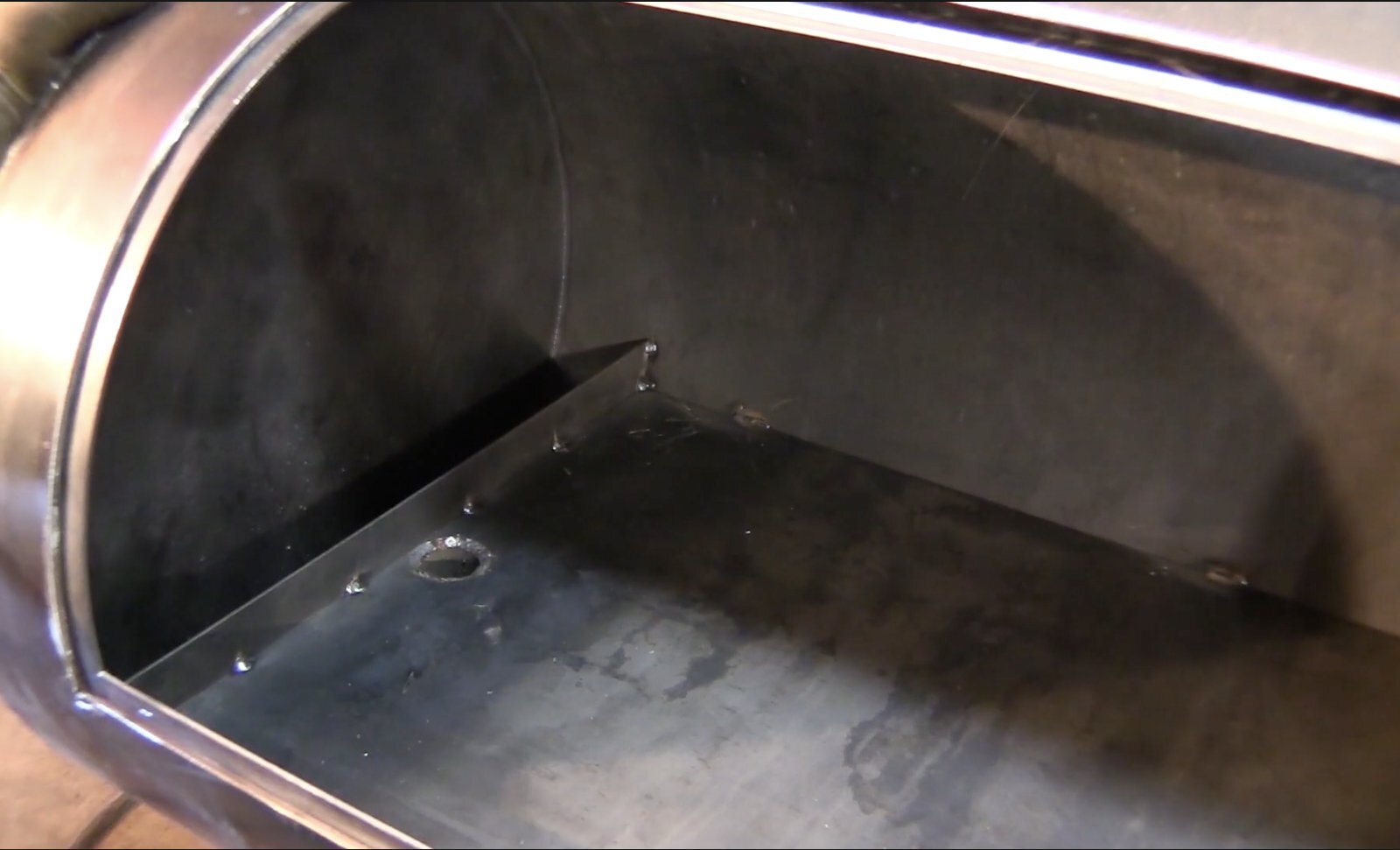
Near the end of the plate where the gap is, centered on that end. It's welded into the plate and comes out through the bottom of the cook chamber, so the plate carries the grease to it.
Build it from 1-1/4" to 2" pipe, usually with a full port ball valve on the outlet.
What are the most common reverse flow mistakes?
- Not welding the plate in solid. Grease gets under it and the whole plate has to come out to clean.
- Seam welds that aren't ground flat. Grease pools on the beads.
- No lip on the gap end of the plate. Grease runs off the end instead of going to the drain.
- Long continuous beads on the plate. They twist the tank. Skip weld it.
- Measuring the gap as a distance. Size it as open area.
- Mounting the firebox too high. On a reverse flow its top has to sit at least 2" below the grate.
- A grate less than 2" above the plate. It scorches the bottom of the food.
- Cutting the doors before the firebox and stack holes. The shell twists.
Where to go from here
Start with the numbers: Offset Smoker Sizing. Then the plate itself: Smoker Baffle Plates.
If this is your first build, you can follow a full 500 gallon build inside SmokerBuilderU step by step, and bring your questions to the live Q&A every Wednesday night at 7pm Central.
Join SmokerBuilderU
If you'd rather start from a drawing, every plan set I've drawn is at smokerplans.net, laid out by cook chamber type and size.
See the reverse flow smoker plans
PS. Size the gap by area. A tape measure alone won't tell you the opening.
Questions builders ask
What is a reverse flow smoker?
An offset smoker with a solid baffle plate under the cooking grate. The heat runs under the plate to the far end, turns around, comes back over the food, and leaves out a stack on the firebox end.
How does a reverse flow smoker work?
Heat and smoke leave the firebox through the throat, travel under the baffle plate to the far end, come up through the return gap, and travel back over the food to the stack at the firebox end.
Is a reverse flow better than an offset?
It depends what you need. If you need two full cooking levels that both run even, build a reverse flow. For a first build, a straight offset is simpler, with less steel, less welding and less weight.
Why is the stack on the firebox end of a reverse flow?
Because that's where the air finishes its trip. The plate sends the heat to the far end and turns it around, so it ends up back at the firebox end, and that's where it has to leave.
How big should the gap be at the end of a reverse flow baffle?
The open area should be 0.50 to 1.25 times the throat area. Start at 0.50, and size up, never under.
How thick should a reverse flow baffle plate be?
1/4" plate is best.
Does a reverse flow baffle plate need to be welded in solid?
Yes. It's welded solid so it catches grease and sends it to the drain. If grease gets under it, the heavy plate has to come out to clean.
Does a reverse flow baffle plate need a lip?
Yes. Weld a 1-1/2" steel strap across the gap end of the plate. It forms a lip that keeps grease from running off the end and sends it to the drain.
Where does the drain go on a reverse flow smoker?
Near the end of the plate where the return gap is, centered on that end. It's welded into the plate and comes out the bottom of the cook chamber. Use 1-1/4" to 2" pipe with a full port ball valve.
How far below the grate does the firebox go on a reverse flow?
The top of the firebox sits at least 2" below the cooking grate. The baffle plate sits at or above the top of the firebox, and the grate sits at least 2" above the plate.

About the author. Frank Cox, The BBQ Pit Engineer, founded SmokerBuilder in 2010 after a career in refrigeration, HVAC and food equipment that now spans 32 years. By his best estimate, he has built more than 1,000 pits in total and drawn more than 240 plan sets. His plans are at smokerplans.net, and he teaches the build step by step inside SmokerBuilderU.