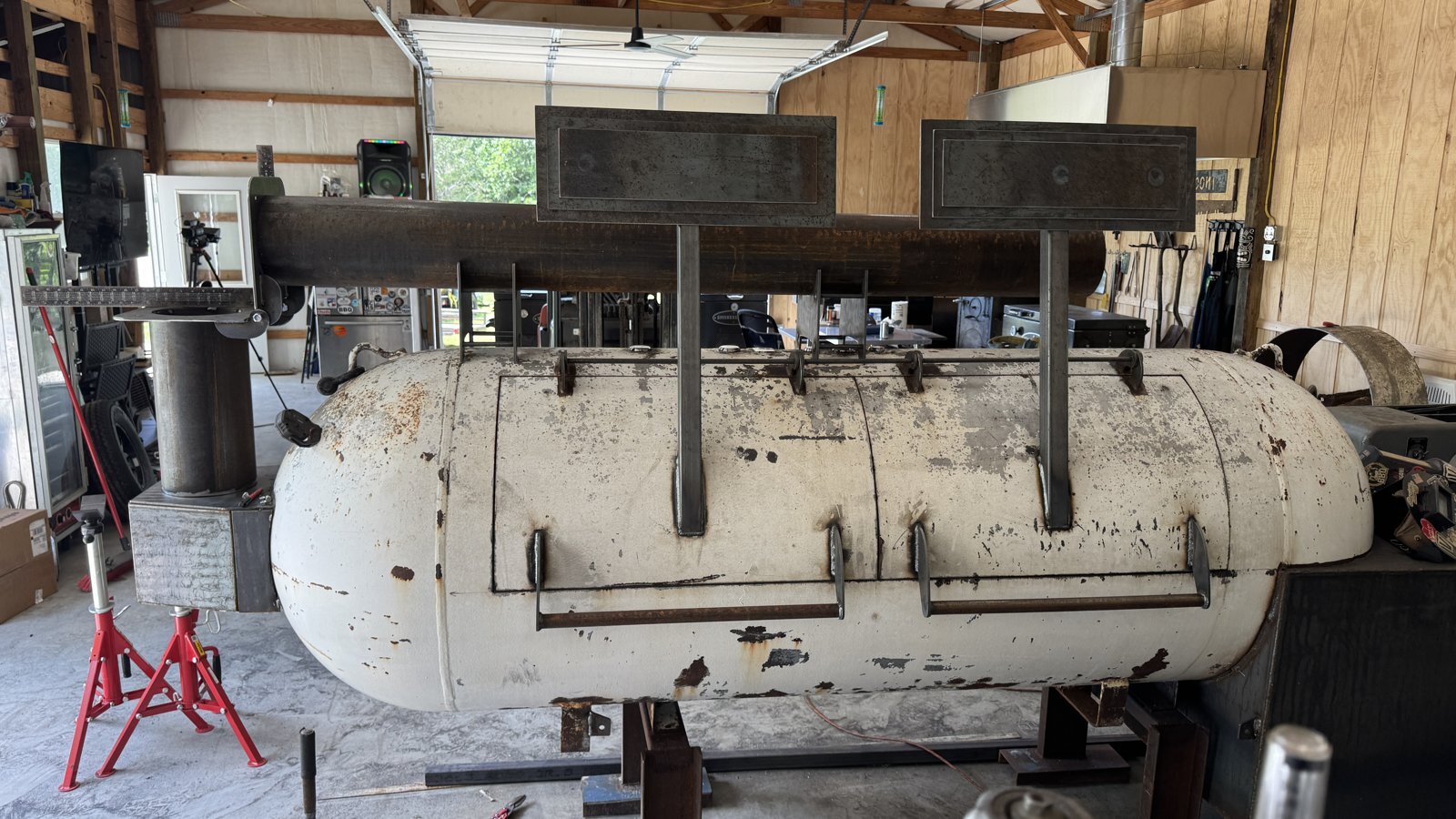
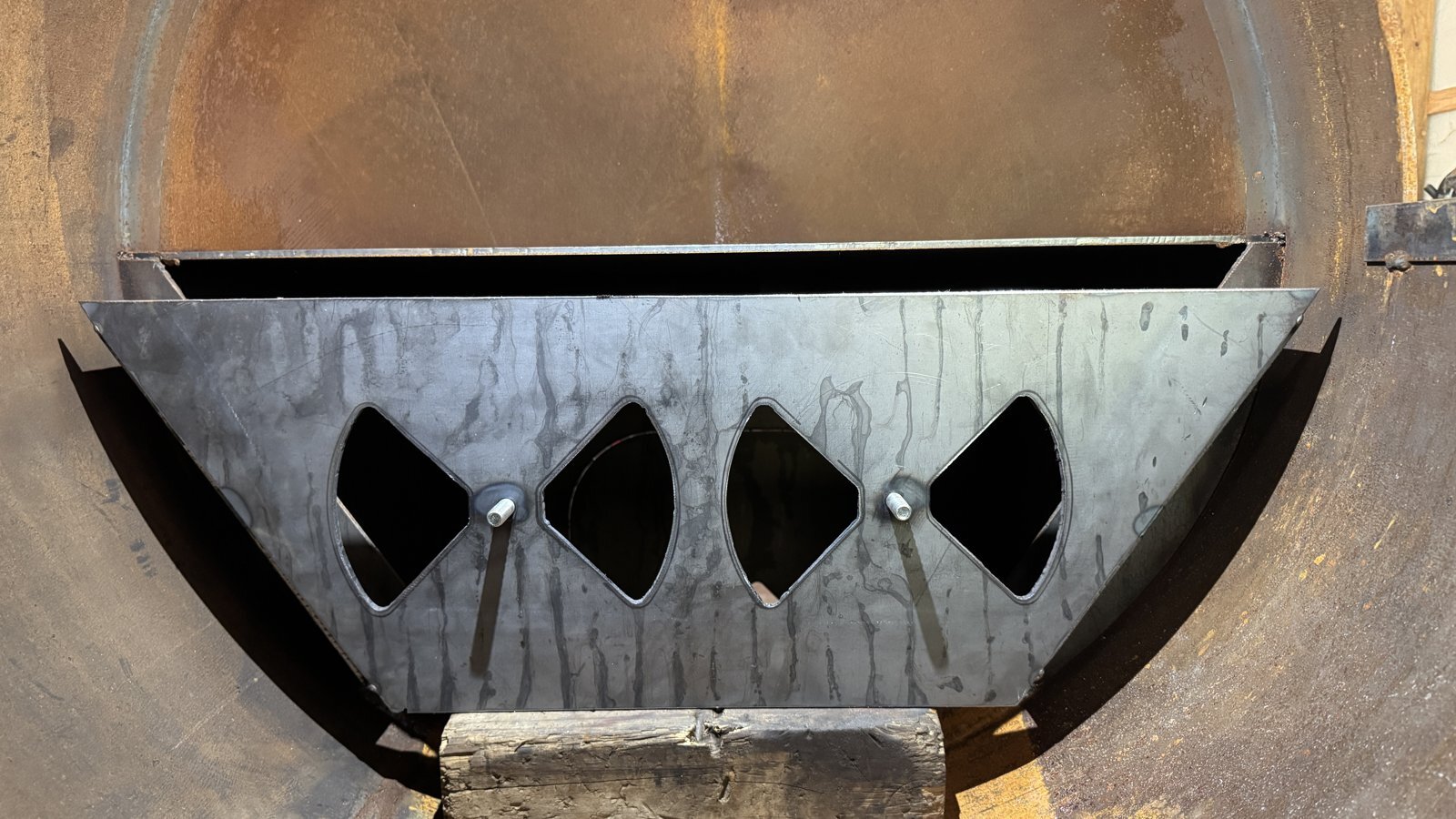
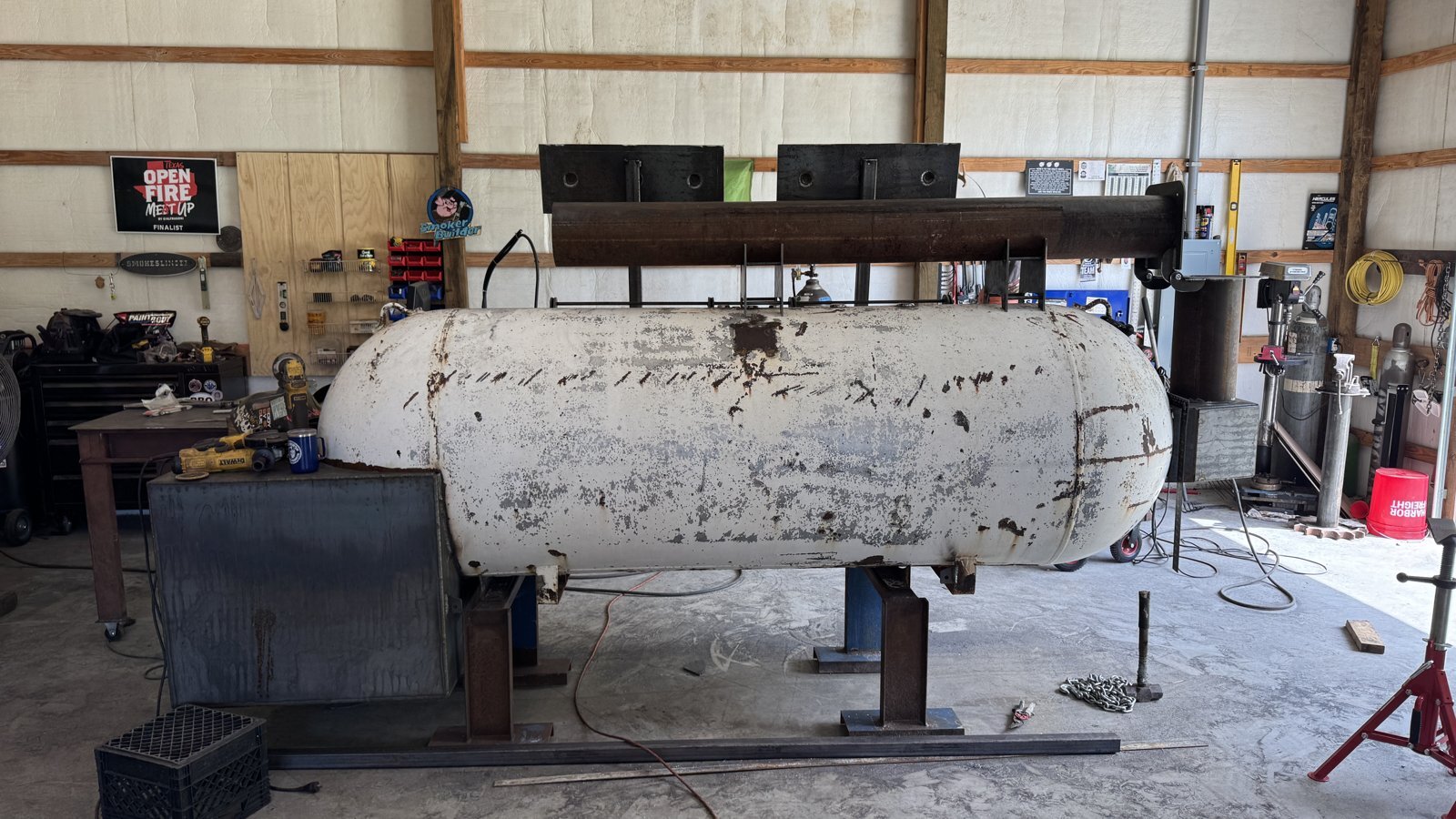

Every offset needs something to shape the heat once it comes through the throat. That's the baffle's job.
There are three ways to do it: a reverse flow plate, tuning plates, or a scoop at the throat. All three get welded in when you build the pit, so this is a build decision, made with a tape and a welder.
Here's how each one works, how to size the one that has a number, and the fit-up mistakes I see most.
Rather have the baffle already laid out on a drawing? My plan sets are drawn by cook chamber type and size. Find the plan for your cook chamber
Key facts from Frank Cox, The BBQ Pit Engineer
- There are three ways to shape the heat: a reverse flow plate, tuning plates or a scoop baffle. A scoop baffle and a vertical baffle are the same thing.
- Reverse flow gap: open area of 0.50 to 1.25 times the throat area, starting at 0.50. That's for reverse flow only.
- The reverse flow plate is welded solid so grease stays on top and runs to the drain.
- Keep the grate at least 2" above the plate. 4" is better.
- On a traditional offset, the firebox end typically runs hotter. A scoop on a balanced design typically cooks even end to end.
Last updated November 26, 2026
What's the difference between a reverse flow plate, tuning plates and a scoop baffle?
- Reverse flow: one solid plate running the length of the chamber. The heat goes under it to the far end, turns around and comes back over the meat. The stack moves to the firebox end. It's built for even temps.
- Tuning plates: several cut-up plates with gaps between them, tighter near the firebox and more open toward the far end. They tune the temperature along the length of the chamber. I think this design is outdated.
- Scoop (vertical) baffle: one plate right at the throat that kicks the air up. The rest of the chamber stays open. This is my favorite right now.
Same job, three welded-in ways to do it.
How big should the gap be at the end of a reverse flow baffle?
Size it by area. The open area of the gap should be 0.50 to 1.25 times the throat area. Start at 0.50.
Why area and not a distance? A 1" gap under a wide plate is a big opening. Under a narrow plate it's a small one. The gap is a flow restriction tied to the throat, so you size the opening, not the measurement.
| Cook chamber | Throat (at 0.30 firebox) | Gap, start at | Gap window |
|---|---|---|---|
| 250 gallon | 139 sq in | about 69 sq in | up to about 173 sq in |
| 500 gallon | 277 sq in | about 139 sq in | up to about 347 sq in |
That window is for a reverse flow plate only. It doesn't apply to a scoop or tuning plates.
How the throat is sized: Offset Smoker Sizing.
Does a reverse flow baffle plate get welded solid?
Yes. Welded solid to both walls.
It's there to catch grease. The plate holds the drippings and sends them to the drain so they run out of the pit.
If grease can get past the edges, it ends up under the plate, and then you have to pull the plate out to clean under it. A full-length plate is heavy, awkward and hard to get out. Weld it in solid and the grease stays on top and goes to the drain.
How far below the grate should the baffle plate sit?
The plate sits at or above the top of the firebox, never below it. The firebox top usually lands about 1" under the plate.
The cooking grate needs to be at least 2" above the plate. 4" is better. Any closer and the heat coming off that plate scorches the bottom of your meat.
That's also why a reverse flow firebox mounts lower than an offset's. More on that here: Offset Smoker Firebox Design.
What does a scoop baffle do?
A scoop baffle and a vertical baffle are the same thing. It's one plate at the throat.
It turns the air up the moment it comes through the throat, before it gets to grate level. Without it, that air blasts straight across the grate like a blowtorch.
It's the same idea as the old trick of stacking splits in front of the throat to push the heat up, just built into the pit.
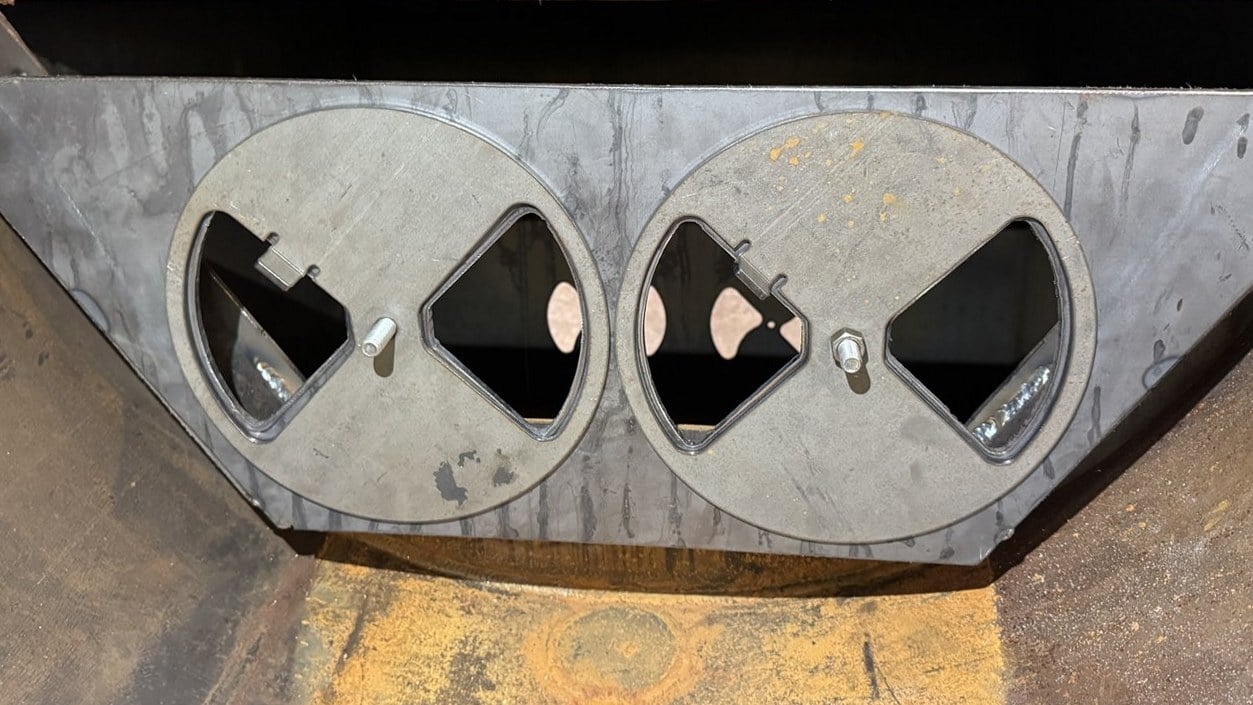
On a traditional offset, the firebox end typically runs hotter. With a scoop on a pit that's designed to my balanced standards, it typically cooks even from end to end.
What are tuning plates and how do they work?
A row of separate plates, cut from 1/4" plate, with gaps between them instead of one solid baffle.
Because the firebox end of a traditional offset runs hotter, the gaps are set tighter near the firebox and more open toward the far end. That restricts the heat more where it's hottest and opens it up where it's cooler, to even out the temperature down the length.
Those gaps get set when you build it. It's a welded-in decision, not something you adjust later.
What are the most common baffle mistakes?
- A reverse flow gap set too tight. It shows up as smoke pushing back out the firebox door. That's a draft problem built into the pit.
- Measuring the gap as a distance. Size it as open area.
- A grate less than 2" above the plate. It scorches the bottom of the food.
- Using the reverse flow window on a scoop. It doesn't apply.
Where to go from here
The baffle depends on the throat, and the throat depends on the firebox. Start here: Offset Smoker Sizing. Still deciding which design to build? Smoker Designs: Offset, Reverse Flow and What to Build.
If this is your first build, you can follow a full 500 gallon build inside SmokerBuilderU step by step, and bring your baffle questions to the live Q&A every Wednesday night at 7pm Central.
Join SmokerBuilderU
If you'd rather start from a drawing, every plan set I've drawn is at smokerplans.net, laid out by cook chamber type and size.
Find the plan for your cook chamber
PS. Size the gap by area. A tape measure alone won't tell you the opening.
Questions builders ask
How big should the gap be at the end of a reverse flow baffle plate?
The open area of the gap should be 0.50 to 1.25 times the throat area, starting at 0.50. On a 250 gallon with a 139 square inch throat, that's about 69 square inches to start. This applies to reverse flow plates only.
Should a reverse flow baffle plate be welded solid?
Yes, welded solid to both walls so grease stays on top of the plate and runs to the drain. If grease gets under it, the plate has to come out to clean, and a full-length plate is heavy, awkward and hard to remove.
How far below the cooking grate should the baffle plate be?
At least 2", and 4" is better. Any closer and heat off the plate scorches the bottom of the food. The plate itself sits at or above the top of the firebox.
What does a scoop or vertical baffle do in an offset smoker?
It turns the air up as soon as it comes through the throat, so it doesn't blast straight across the grate. On a balanced design, an offset with a scoop typically cooks even from end to end.
What's the difference between a reverse flow plate and tuning plates?
A reverse flow plate is one solid plate the full length of the chamber that sends the heat to the far end and back. Tuning plates are separate plates with gaps between them, tighter near the firebox and more open toward the far end.
Which end of an offset smoker runs hotter?
On a traditional offset, the firebox end typically runs hotter. With a scoop baffle on a balanced design, it typically cooks even from end to end.

About the author. Frank Cox, The BBQ Pit Engineer, founded SmokerBuilder in 2010 after a career in refrigeration, HVAC and food equipment that now spans 32 years. He designs the plan sets at smokerplans.net and teaches the build step by step inside SmokerBuilderU.