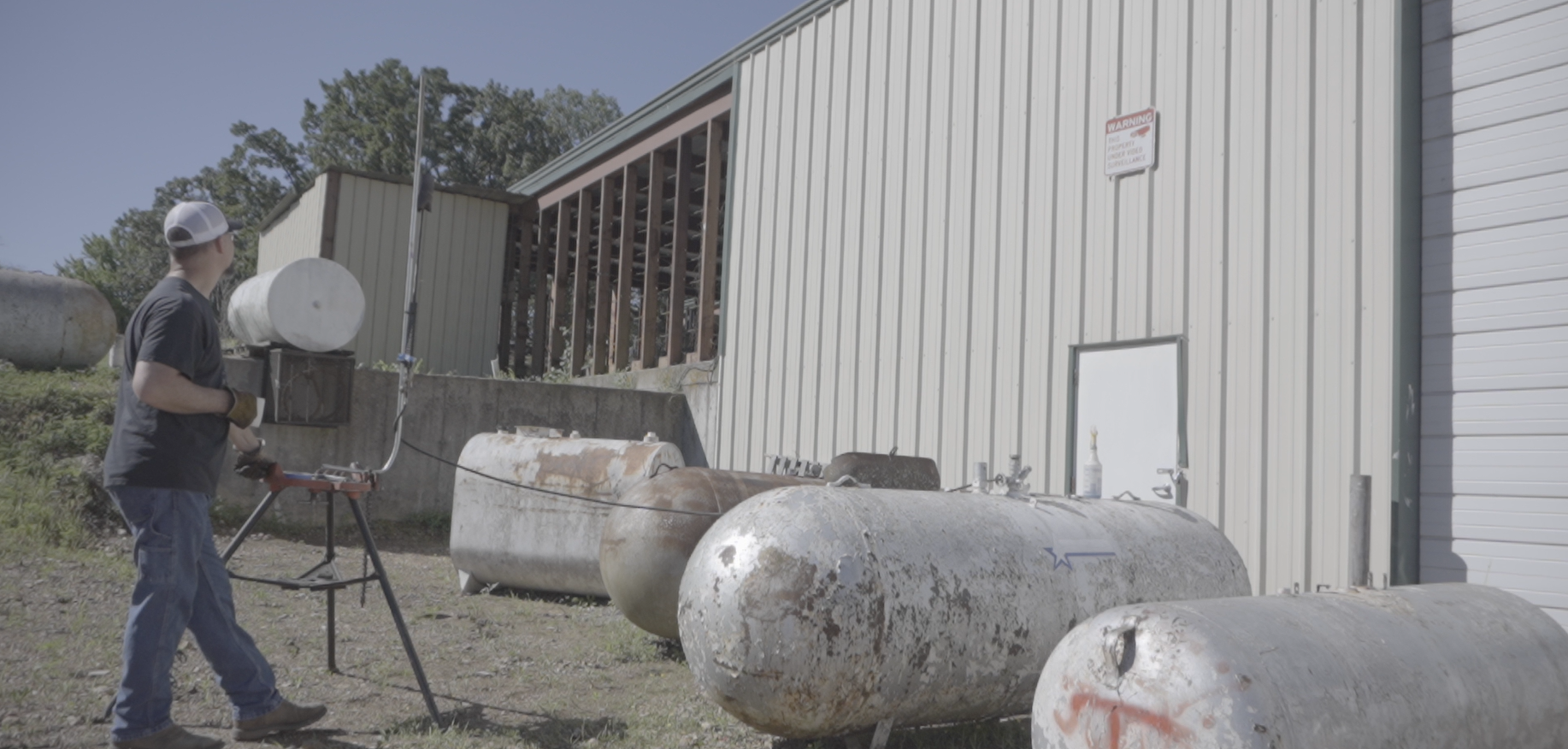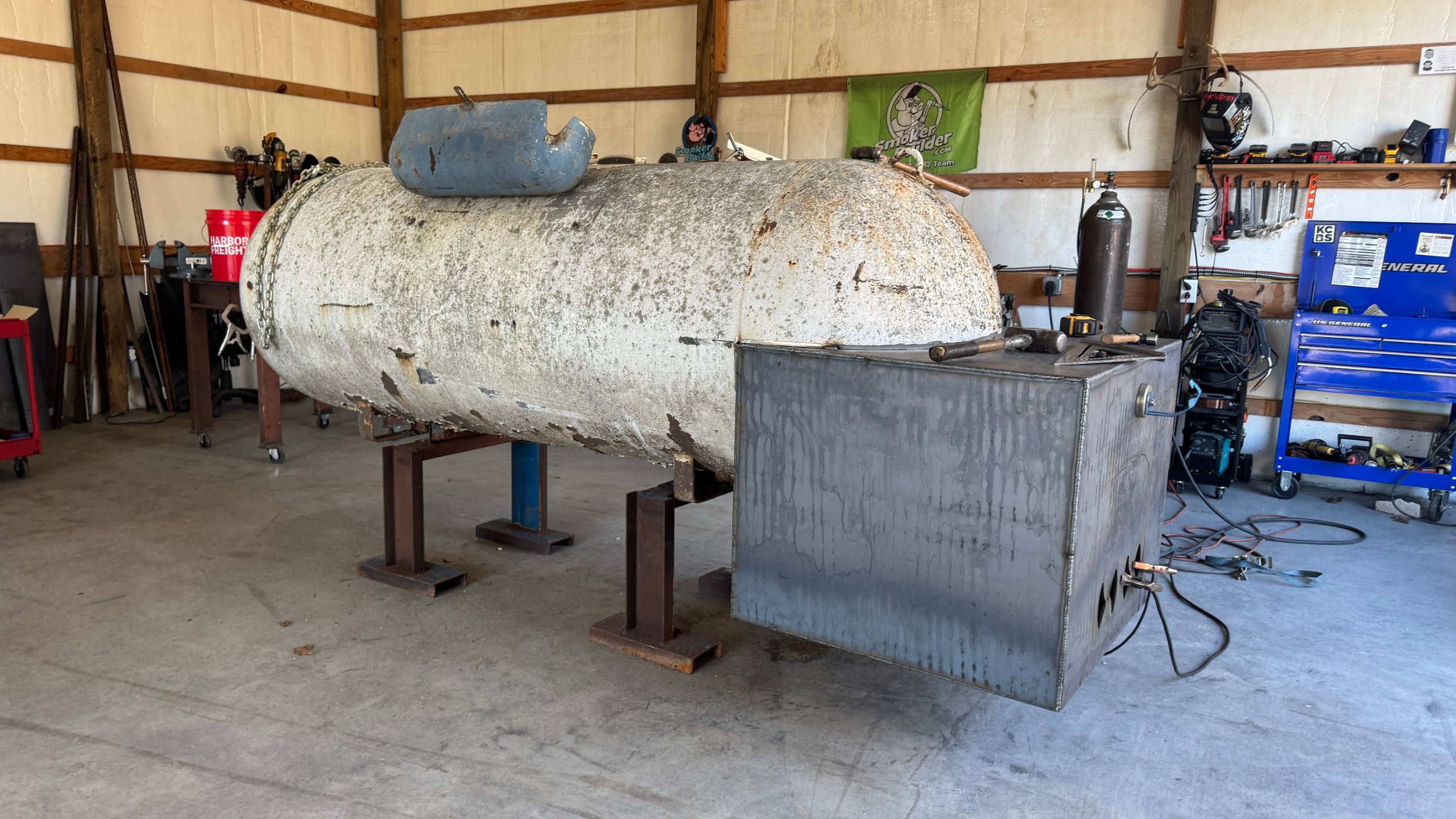

Yes, you can build your own smoker. Even if you've never struck an arc.
I've been teaching people to build smokers since 2010, and the first-timers who finish a good pit all get three things right before they cut any steel.
They pick the size first.
They buy the right tools, not the most tools.
And they have an honest plan for the parts they can't do yet.
That's what this page walks through. Every section ends with something you can go check yourself… a measurement, a test on scrap, a question to ask a seller.
Can I build a smoker if I've never welded?
This is the question I get more than any other. Usually it's not asked out loud.
Here's the honest answer. You don't have to weld the whole thing yourself to end up with a finished pit. There are three ways first-timers get it done.
- Team up with a welder. A buddy who welds does the cutting and welding. You do the layout, the prep, the grinding, the paint. You learn every step standing right there.
- Cut it all yourself from the plans. It works. It also takes about three times as long, and it's hard to get every piece accurate the first time.
- Send the plan's cut file to a steel supplier. Some of my plan sets come with a CNC cut file. A steel supplier loads it and cuts the flat parts for you, so the pieces show up already the right shape.
I'll be straight with you. A big cooker, say a 36" diameter chamber, can be overwhelming on a first build. Size matters here too, and we'll get to that next.
Whichever way you go, start on scrap. Cut some small squares. Weld them back together. Do it again. It feels like a waste of time and it's the most important thing you'll do before you touch your tank.
Check: before you buy a tank, cut and weld a pile of scrap squares. The break test in the tools section below tells you if those welds are any good.
Building your first one? Inside SmokerBuilderU you can follow a full 500 gallon build step by step, and bring your questions to the live Q&A I do every Wednesday night. Join SmokerBuilderU
Start with size, not gallons
Most people shop for a smoker by gallons. A 250. A 500.
The gallon number doesn't tell you how much meat fits.
Grate area does.
Measure the cooking grate in inches, multiply length by width, and divide by 144. That's square feet.
Figure about one square foot per pork butt, plus a few inches around each one so the air can move.
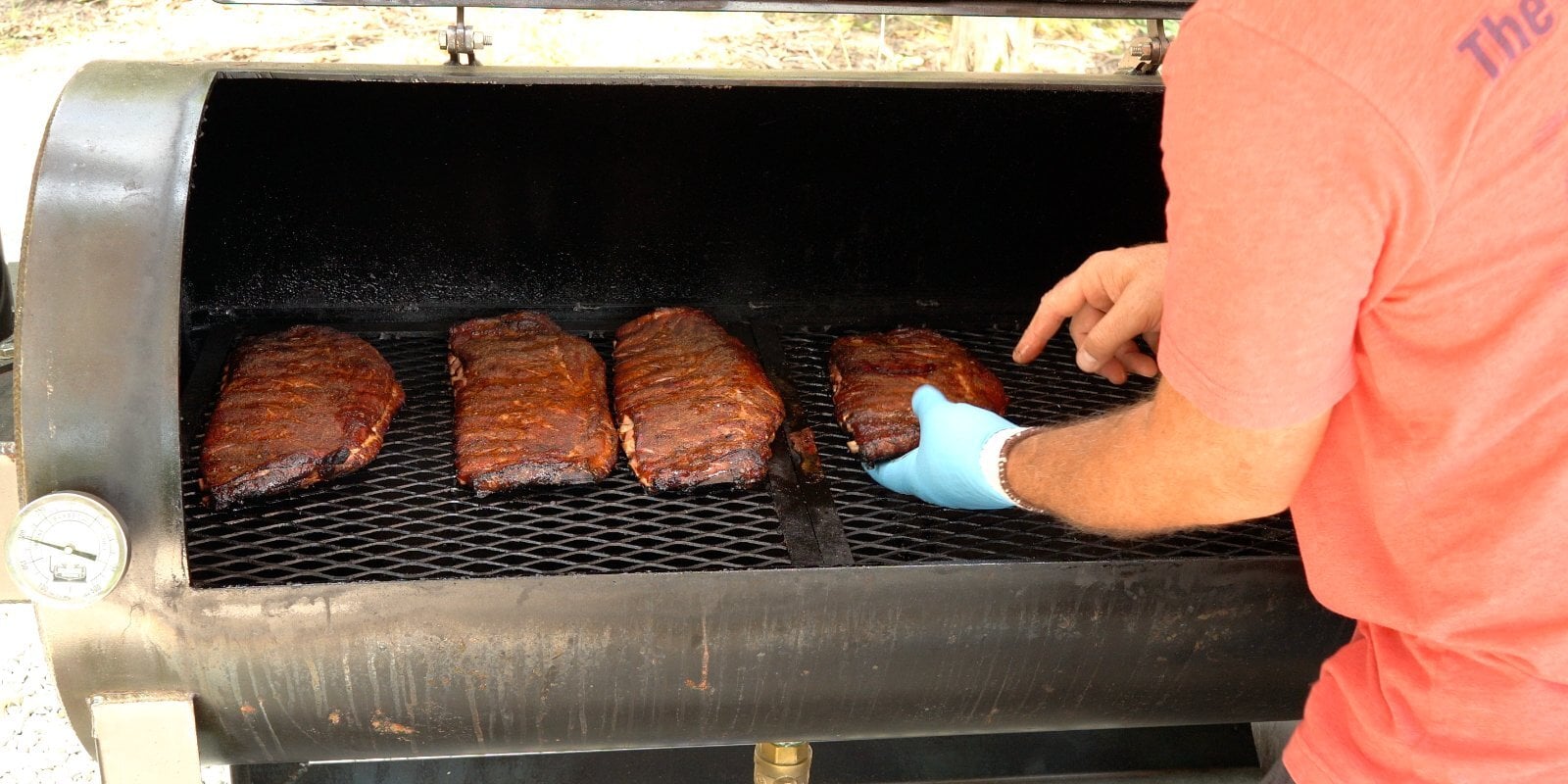
Gallons still matter. They're what you size the firebox and the stack to. They just don't tell you how many people you can feed.
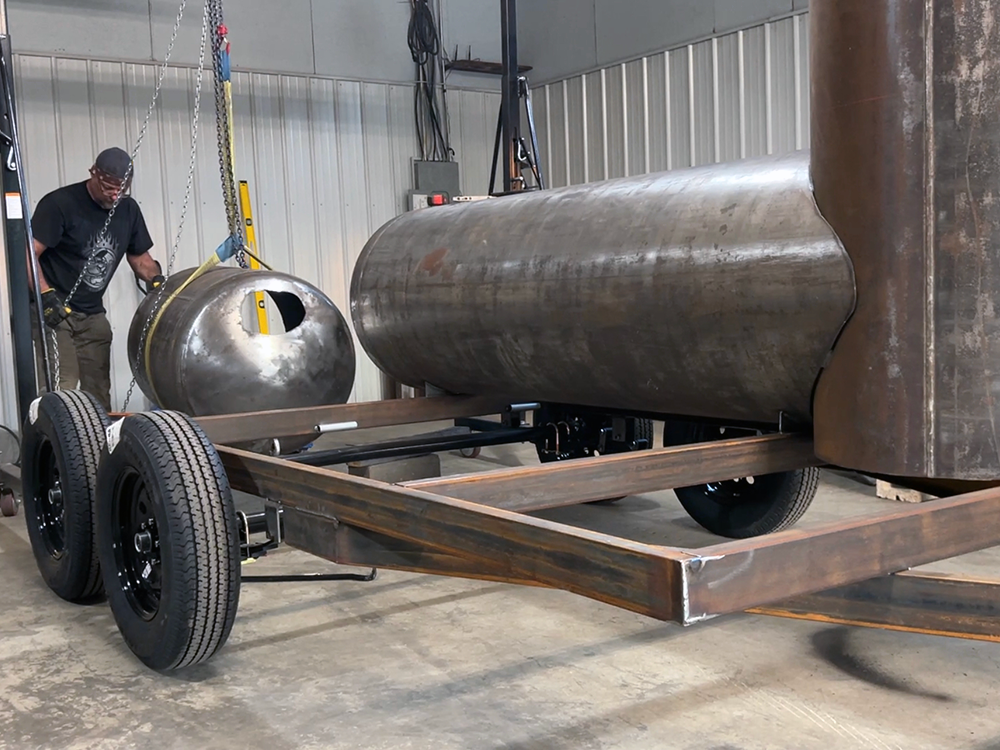
Size also picks your axle. The weight is in the iron, and once you pick the tank and the plate it's locked in. 1/4" plate runs about 10.25 lb per square foot. 3/8" runs about 15.
| Chamber | Axle |
|---|---|
| 250 gallon | 3,500 lb single axle, as long as you're not hauling a lot of heavy gear on it |
| 500 gallon | 6,000 lb or heavier. I'd never put a 500 on anything smaller. |
| 1,000 gallon | 10,000 lb or heavier |
Plan the shop floor too. A built 1,000 gallon tank and firebox, no insulation, comes in around 5,000 lb. You need equipment that can lift that.
Check: count the pork butts you want to cook at one time. Multiply by about 144 square inches each. That's the grate you need. Then look at the axle line for that size before you fall in love with a tank.
The tools you actually need for a first pit
Most of a smoker build is 1/4" steel or thinner. That's why you don't need an industrial shop to build one. You need a short list of the right tools.
The welder. Buy an entry-level 200+ amp multi-process machine and start with MIG.
MIG costs about the same to get into as stick, and the learning curve is a lot shorter.
A multi-process machine gives you MIG and stick in one box for one price. And if getting a bottle of shielding gas is ever a problem, it'll run flux-core.
I've run the ArcCaptain 250 (about $500) on a smoker build and it performs great. Other brands are priced about the same.
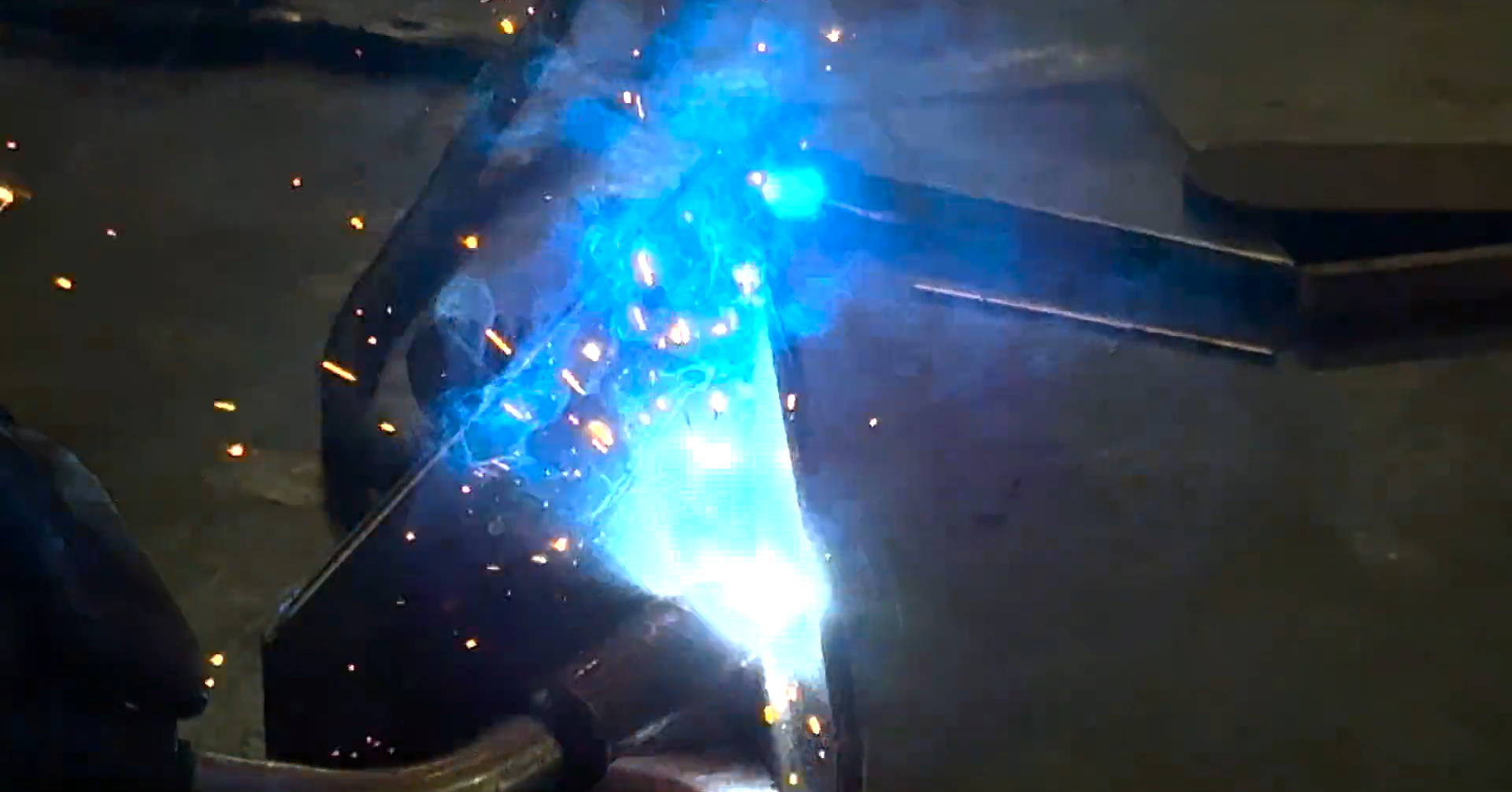
Why 200+ amps? Roughly one amp per thousandth of an inch of steel. Welding 1/4" in one pass wants about 250 amps. There's just no reason to buy a smaller machine anymore.
When you compare machines, look at two numbers. Amperage, and duty cycle. Duty cycle is how much of the time the machine can run before it has to cool down.
The cutter. Plasma. An affordable plasma cutter like the BestArc 60A (about $250, I've tested it) costs a fraction of an oxy/acetylene setup and it's a lot safer for a beginner. A torch is still handy later for heating and bending. Plasma is what you cut with.
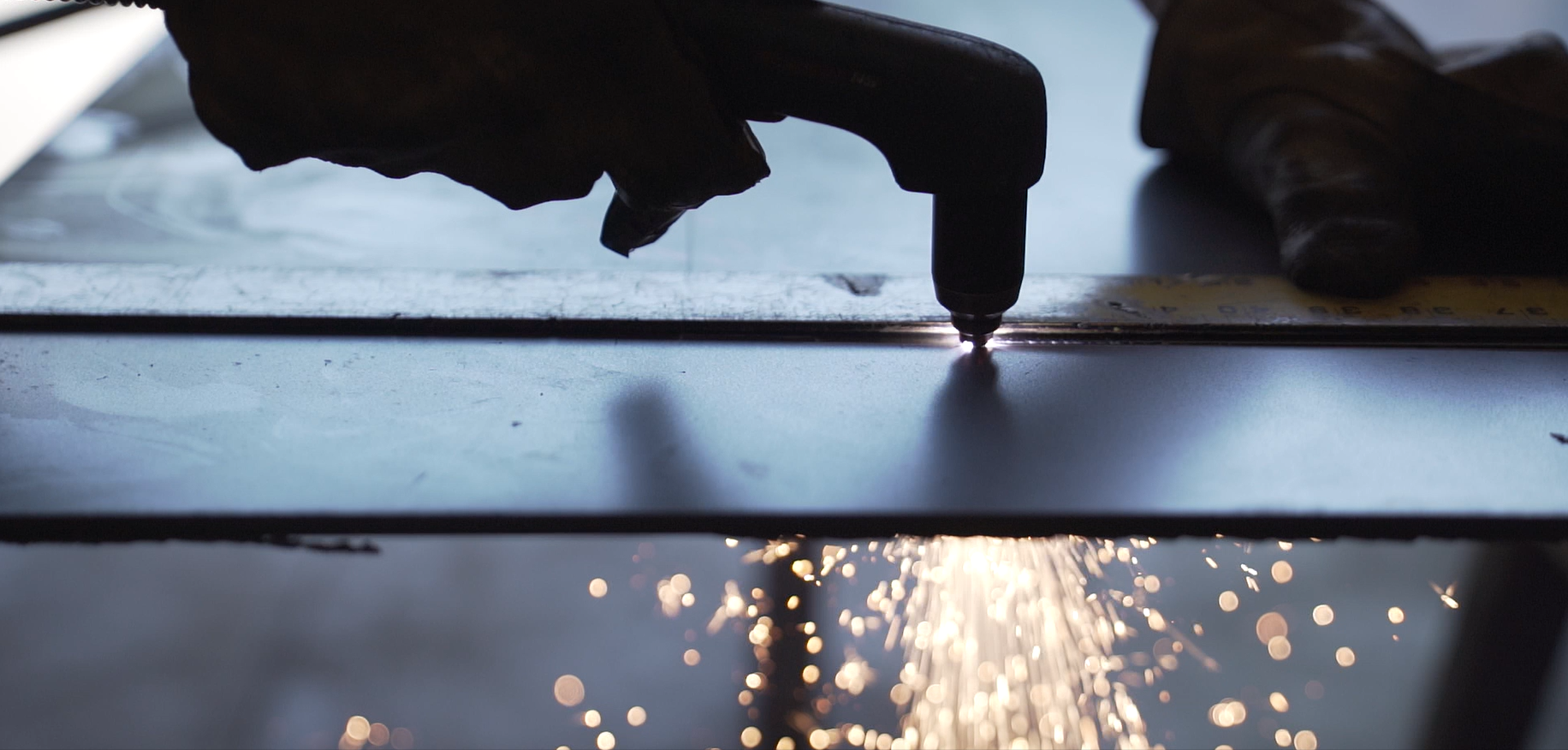
The grinder. Get one with a clutch.
Never run a cutting disc on a standard angle grinder. A disc can come apart. The clutch lets the wheel bind up safely instead of grabbing.
Never run a slicer disc without the guard and the clutch.
Stand on the disc's friendly side, so what comes off it throws away from you.
Check: you can't tell if a weld penetrated by looking at the top of it. Weld two scrap pieces together, then bend or break the joint and look at the broken face. Metal fused all the way through the root means it penetrated. A clean unfused line means it didn't. Fix that on scrap, not on your tank.
Propane tank or new steel?
A used propane tank is the classic homemade smoker body. It's also where most of the real risk in a first build lives.
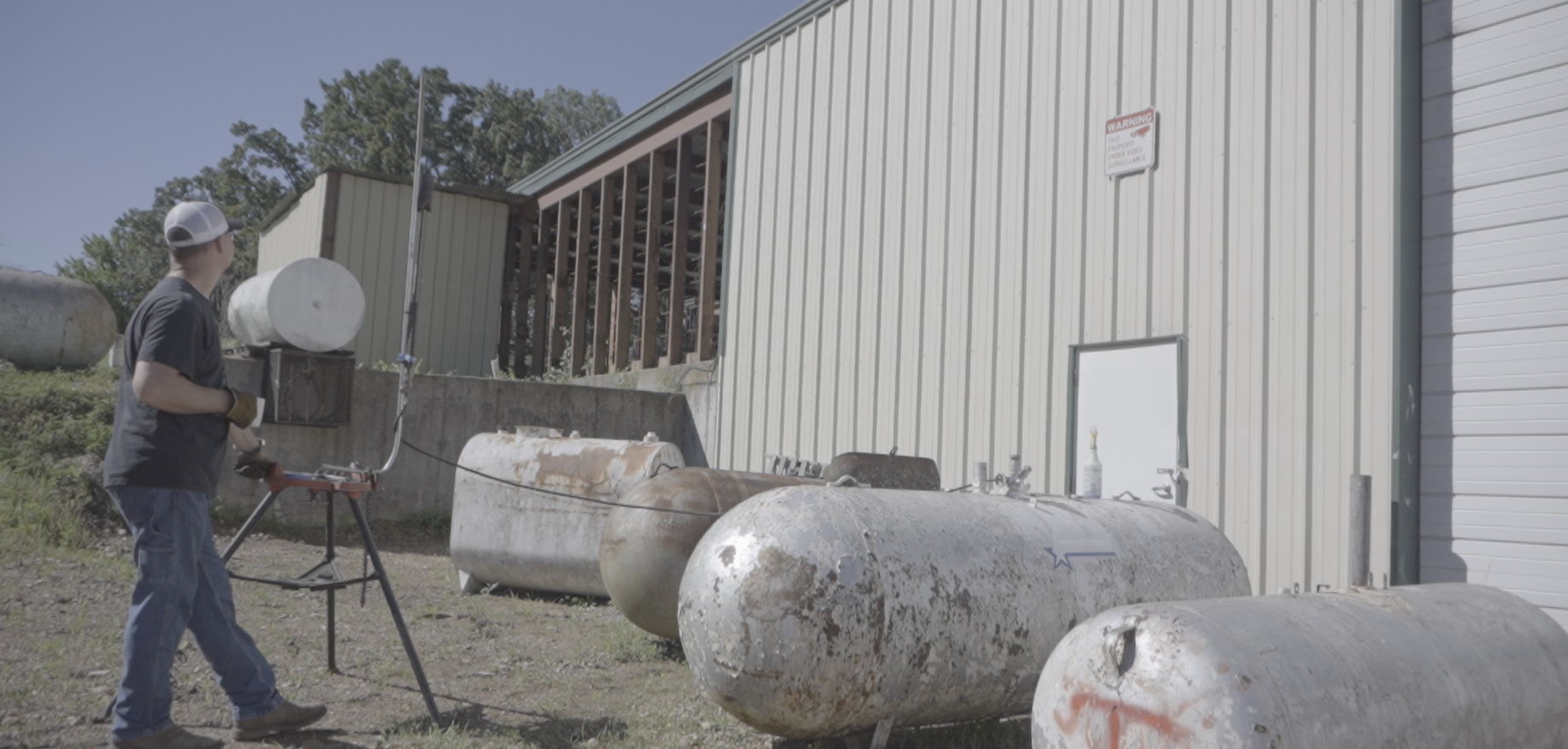
Where you buy it decides how much risk you bring home with it.
A tank refurbisher or a propane company is probably your safest bet. The tank shows up already purged, with the valves out.
Hauling a tank with the valve still in it under pressure is illegal here in the US. That's hazmat.
Never buy a tank somebody welded on in the field unless it's been X-rayed and re-certified.
More on where to look: Where can I buy a used propane tank for building a homemade smoker?
If you end up purging one yourself, know this first. The gauge on a propane tank shows how full it is of liquid. It doesn't show pressure. A gauge reading near zero does not mean the tank is empty of pressure.
And if purging a tank scares you, don't do it. Buy one that's already done.
Two of the most-watched videos on my channel cover exactly this:
What wall thickness to buy. 1/4" is the standard for an offset. A tank in the 3/16" to 1/4" range is where you want to be, and a used tank that measures 3/16" or heavier is a good buy.
Air and water tanks usually run about 1/8". They'll work. You're buying a pit that runs colder when the weather turns.
Schedule 40 pipe at 24" and up runs close to 3/8" actual wall. That's heavier than a tank, so go back and look at that axle table.
Thicker isn't automatically better. In my experience a 5/8" pit doesn't cook any better than a well-built 1/4" one.
Check: look where the valve was. It should be an open hole. If the seller can't tell you the tank's been purged and the valves are out, walk away.
What to expect on your first build
Something is going to fight you. That's normal. Here's what it usually is.
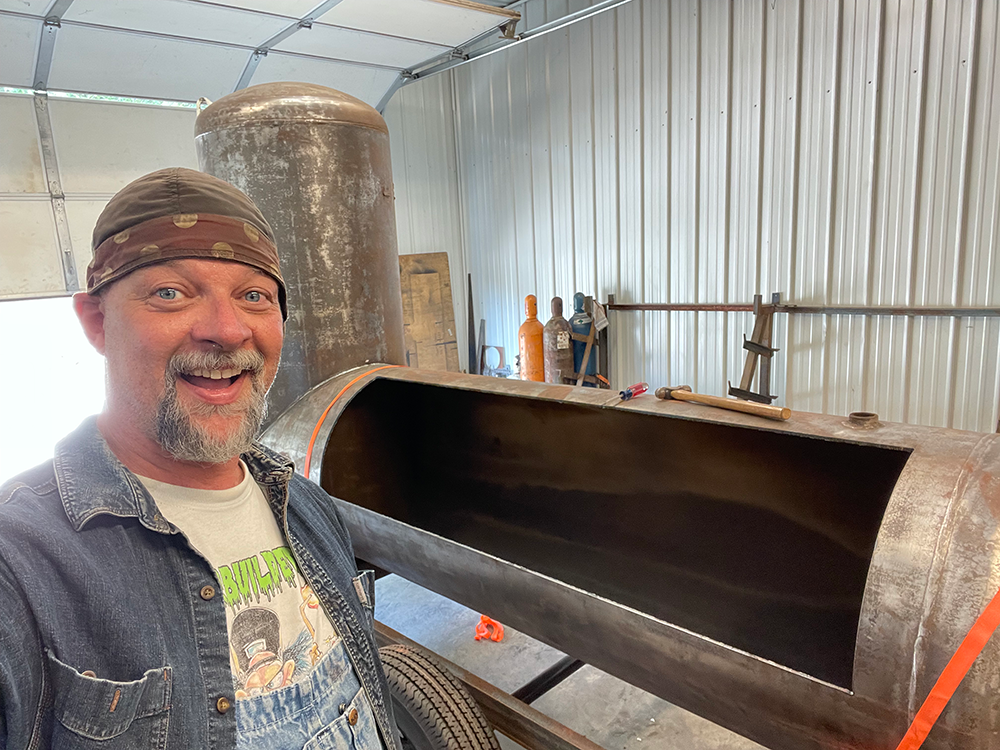
Your tank isn't perfectly round. Propane tanks get forced into round when the heads are swaged on and the seams are welded. So no two are exactly alike, and none of them are perfectly round to begin with. When a piece won't sit right, it's very often the tank, not you.
Gaps happen. A small, even gap up to about 3/16" is good practice, not a flaw, as long as the weld penetrates. Every time I say a fit came out perfect, somebody in the comments calls me on it.
Tack, check, then weld. Tack it in at least three places so it can't hinge on you. Check it. Re-check it. Weld it out only when it's right… a tack is a lot easier to cut loose than a finished bead.
Cut in the right order. On a tank, cut and mount the firebox hole and the stack hole before you cut the doors. Cut the doors first and the shell can relax and twist on you.
I've made my share of mistakes on camera. On the 1,000 gallon build I cut a patch wrong, re-marked it and cut it again, right there in the video: 1000 Gallon Smoker Build: How To Mount A Round Fire Box
Check: before every full weld, put a tape or a level on it one more time. If you're about to weld and you haven't checked it twice, stop.
Where to go from here
This page gets you to the starting line. A full build is a few hundred decisions after this… every measurement, every cut, what to do when the tank fights back.
If this is your first build, that's what SmokerBuilderU is for. You can follow a full 500 gallon build there step by step, from the tank to the trailer. And when you get stuck, bring it to the live Q&A I do every Wednesday night.
Join SmokerBuilderU
If you already know your size and style, every plan set I've drawn is at smokerplans.net. Fully dimensioned, ready to download, and some come with the CNC cut file for a steel supplier.
Browse smoker plans
PS. Whichever way you go, start with those scrap squares.
Questions builders ask
Do I need a shop to build a smoker?
No. Most of the build is 1/4" steel or thinner, so a welder, a plasma cutter and a clutch grinder cover most of it. Plan for a way to lift the heavy pieces once the tank and firebox come together.
What size welder do I need to build a smoker?
An entry-level 200+ amp machine. About 250 amps welds 1/4" in a single pass. Get a multi-process machine and you have MIG, stick and flux-core in one box.
How thick should the steel be on a homemade smoker?
1/4" is the standard. A propane tank in the 3/16" to 1/4" range is a good buy. Air and water tanks around 1/8" work but run colder when the weather turns.
How big should my first smoker be?
Size it to the grate, not the gallons. Figure about one square foot of grate per pork butt. Then check the axle that size needs. A 250 gallon rides on a 3,500 lb single axle, a 500 needs 6,000 lb or more.
Can I build a smoker from a propane tank?
Yes, it's the classic way to build one. Buy it from a refurbisher or a propane company already purged with the valves out. Never buy a tank somebody welded on in the field unless it's been X-rayed and re-certified.